
HVAC Maintenance in Edmonton
Pre-winter tune-ups, spring AC prep, filter timing, and the inspections that catch problems before they become mid-winter emergencies.
What Maintenance Plans Cover
The main considerations for Edmonton residential and commercial properties.
Fall Furnace Tune-Up
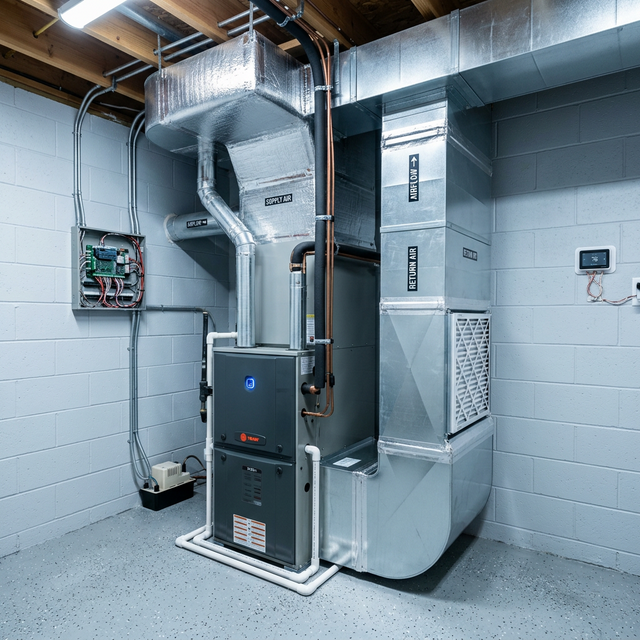
Full furnace inspection before Edmonton's heating season: heat exchanger check, combustion analysis, burner cleaning, blower service, safety verification. Catches problems before the first -25°C night.
Spring AC Tune-Up
Cooling system prep before summer heat events: coil cleaning, refrigerant check, capacitor test, condensate line clearing. Catches refrigerant leaks and failing parts before peak demand booking pushes wait times.
Annual Maintenance Plans
Prepaid annual maintenance contracts covering both seasonal tune-ups plus priority scheduling, discounted diagnostics, and warranty documentation. Common structure: 2 visits/year with priority dispatch during peak demand.
Filter Service & Replacement
Filter replacement on the right schedule for the specific home. Standard 1-inch filters get changed every 1–3 months; 4/5-inch media filters every 6–12 months; MERV-13+ during smoke season may need monthly checks.
Humidifier Maintenance
Annual humidifier service before heating season: water panel replacement, drain line clearing, controls check, humidity setpoint verification. Neglected humidifiers underperform and can leak or grow biofilm.
HRV/ERV Service
Ventilation equipment cleaning: core cleaning, filter replacement, motor check, condensate line clearing, and airflow verification. Neglected HRVs lose efficiency fast and can develop frost issues in cold snaps.
Safety Inspections
Carbon monoxide testing, gas leak detection, heat exchanger inspection, and combustion analysis. The safety side of maintenance — the checks that homeowners can't perform themselves and that catch invisible hazards.
Ductwork Assessment
Duct leakage testing, insulation inspection, and airflow measurement. Duct problems drive many comfort complaints homeowners blame on the furnace or AC — worth verifying during maintenance rather than replacing equipment.
Common Maintenance Plans Problems in Edmonton
The specific issues Edmonton homeowners run into — and what typically causes them.
Furnace fails first cold snap
System 'worked fine last spring' but doesn't come on when temperatures actually drop. Classic missed-maintenance pattern: flame sensor fouled, igniter marginal, or pressure switch clogged since last use.
Gas bills creeping up year over year
Same thermostat setpoint, higher bill each winter. Efficiency drift from dirty burners, restricted airflow, heat exchanger scale, and blower motor wear. Reversible with proper tune-up — but you have to know it's happening.
Uneven heat despite service
One room cold, one warm. Usually not the furnace — it's duct balance, closed dampers, undersized returns, or duct leakage in the basement. Maintenance visits catch this if they include airflow measurement, not just filter replacement.
CO alarm going off intermittently
Carbon monoxide alarm triggers randomly. Not always a false alarm. Usually a cracked heat exchanger leaking small amounts of CO into the airstream. Requires immediate inspection with a real combustion analyzer, not a handheld sniffer.
Can't get service in December
Furnace fails during a cold snap and every technician is booked 5-7 days out. This is what maintenance plans buy — priority scheduling means you jump the queue when everyone else is calling at once.
AC hasn't been serviced in 5+ years
Cooling still works but efficiency has quietly dropped 20–30%. Dirty condenser coil, refrigerant slightly low, capacitor showing weakness. Fixable now for the cost of a service call; ignored, becomes a mid-July emergency.
Humidifier won't hold humidity
Setpoint at 40% but reading 25%. Water panel is scaled and passing water through instead of evaporating it, or the drain is clogged, or the controls need calibration. All fixable in one maintenance visit.
Recurring 'weird smells' from vents
Musty, burning, chemical, or wet-dog smells that come and go. Usually a maintenance issue: mould in the coil, dust burnoff, dirty filter, or biofilm in the humidifier. Not usually a scary problem, but not one to ignore.
Why Edmonton's Climate Makes Maintenance Non-Negotiable
Edmonton heating systems work harder than their counterparts in most of Canada. Seven months of heating season, temperatures that routinely hit -30°C or lower, and significant humidity swings between seasons all accelerate the wear that skipped maintenance fails to catch.
The heat exchanger is the safety component most homeowners never think about. Cracks in the heat exchanger allow combustion gases — including carbon monoxide — to enter the airstream. This is invisible without a proper inspection. It's the reason annual furnace maintenance isn't a sales pitch; it's a safety check.
Maintained equipment in Edmonton runs at its rated efficiency. A furnace that hasn't been serviced in three years may be running at 80% of its rated efficiency due to dirty burners, restricted airflow, and calibration drift — all of which translate directly to higher gas bills and shorter equipment life.
Edmonton Maintenance Plans: Cost & Rebates
Maintenance costs are predictable and small compared to what neglected systems cost. These are typical Edmonton ranges for scheduled service and preventive contracts.
Typical Cost Ranges
Rebates & Incentives
- Maintenance Plan SavingsNot a rebate but real value: plan holders typically get 10–15% off any repairs, priority scheduling during peak demand, and no after-hours fees for emergency dispatch.
- Efficiency PreservationMaintained systems run 15–25% more efficiently than neglected ones. Over Edmonton's 7-month heating season, that's meaningful gas bill savings independent of any rebate.
- Warranty ProtectionMost manufacturer warranties require documented annual maintenance to remain valid. Skipping maintenance can void expensive parts warranties on a 5–7 year old system.
- Insurance ConsiderationsSome home insurers offer minor premium reductions with documented HVAC maintenance history. Also — insurance claims for CO-related incidents often require proof of professional maintenance.
Dedicated pages for the most-searched Edmonton HVAC needs — same connection service, faster access to what's most relevant to your situation.
Related guides on this topic
Furnace Short Cycling in Edmonton: 7 Causes Ranked by How Common They Are
Why your Edmonton furnace keeps starting and stopping every few minutes — and the fix that actually solves it rather than treating the symptom.
Read guide →Furnace Blowing Cold Air in Edmonton: Diagnostic Flowchart & Fixes
If your furnace blower is running but the air coming out is cool, here's the step-by-step diagnostic that identifies the real cause.
Read guide →Furnace Flame Sensor Cleaning: Edmonton Homeowner's Honest Guide
A dirty flame sensor causes roughly 40% of all Edmonton furnace no-heat calls. Here's what it is, why it fails, and what cleaning actually involves.
Read guide →Frequently Asked Questions
How often should I get my HVAC system serviced in Edmonton?
Biannual maintenance is the practical model: a heating tune-up in fall (September/October) before cold season, and an AC/cooling check in spring (April/May) before summer. Edmonton's extreme -40°C winters put significant stress on heating systems, making fall maintenance especially critical to catch problems before they become mid-winter emergencies.
What does an HVAC tune-up include?
A proper 21-point HVAC inspection covers heat exchanger inspection, gas pressure check, burner cleaning, blower cleaning, thermostat calibration, electrical connection tightening, filter replacement, refrigerant check (for AC), duct leak assessment, and a full safety inspection including carbon monoxide testing — with a written report of all findings.
Does regular maintenance actually save money?
Yes. Maintained HVAC systems run 15–25% more efficiently than neglected ones. In Edmonton, where heating costs are significant from October through April, this translates to meaningful annual savings on gas bills. Maintenance also catches small issues — like a cracking heat exchanger — before they become expensive emergencies or carbon monoxide safety hazards.
Is a maintenance plan worth it?
For most Edmonton homeowners, yes — because the value isn't just the two service visits. Plan holders get priority scheduling during peak demand (December furnace failures, July AC failures), 10–15% off any repairs, waived after-hours fees, and documented service history that supports warranty claims. The plan often pays for itself in a single emergency scenario.
What happens if I skip a year of maintenance?
One skipped year usually isn't catastrophic if the system was in good shape. Skipping multiple years compounds: efficiency drift, filter neglect stressing blower motors, unaddressed heat exchanger issues, refrigerant leaks going undetected, and warranty compliance risk. Systems that fail 8–10 years in usually have a history of skipped maintenance.
What's the best time of year for HVAC maintenance in Edmonton?
Furnace tune-ups: September and October (before first cold snap). AC tune-ups: April and May (before first heat wave). Booking in these windows means shorter waits and better scheduling. Peak demand months (December, July) have long waits and worse pricing. Off-season months (November after the rush, June before the rush) are also fine.
Do maintenance plans include emergency repairs?
Usually not — the plan covers scheduled tune-ups plus benefits (priority, discounts). Emergency diagnostics and repairs are billed separately, but at reduced rates and often with waived after-hours dispatch fees. Some higher-tier commercial and residential plans do include limited emergency coverage; worth confirming what's actually in the specific plan.
Can I do HVAC maintenance myself?
Yes for some items: filter changes, keeping the outdoor AC unit clear of debris, cleaning supply and return grilles. No for the safety and diagnostic side: heat exchanger inspection, combustion analysis, CO testing, refrigerant handling, and gas pressure verification all require specialized equipment and (for gas work) certification. DIY doesn't replace professional maintenance for the same reason it doesn't replace a doctor's visit.
Maintenance Plans Across the Edmonton Capital Region
Select your community to see local service details and what sets your area apart.
Edmonton & Major Suburbs
Don't see your area? Call us — we may still serve you.
Call (825) 402-7112