
Indoor Air Quality in Edmonton
Wildfire smoke, dry winter air, and airtight modern homes — the specific IAQ challenges Edmonton homeowners face, and what actually works.
What Indoor Air Quality Cover
The main considerations for Edmonton residential and commercial properties.
Whole-Home HEPA Filtration
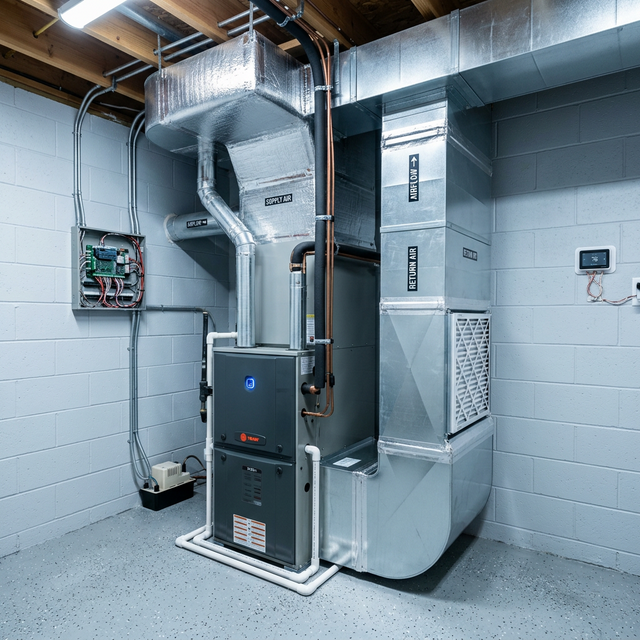
Ducted HEPA filtration integrates with the furnace to filter every cubic foot of air moving through the home. Meaningful reduction in PM2.5 during wildfire season and daily pollutants year-round.
UV Germicidal Lights
UV-C lights installed on the air handler neutralize bacteria, viruses, and mould spores before they circulate through the ductwork. Especially useful for households with immunocompromised residents.
Whole-Home Humidifiers
Bypass, powered, and steam humidifiers integrated with the furnace maintain 35–50% relative humidity through Edmonton winters. Fixes dry skin, static, respiratory irritation, and cracking wood floors.
Dehumidification
For basements with persistent moisture, humid summer weeks, or homes with poor ventilation. Whole-home dehumidifiers integrate with existing HVAC; portable systems handle isolated problem areas.
Wildfire Smoke Response
Upgrade recommendations for smoke advisory days: filter upgrades, whole-home purifiers, and MERV-13+ filtration setups that meaningfully reduce indoor PM2.5 during weeks of poor outdoor air quality.
Indoor Air Quality Testing
Objective measurement of what's actually in the air: PM2.5, VOCs, humidity, CO2, mould spore counts. Gives baseline numbers to act on rather than guessing at symptoms.
IAQ System Repair
Service and repair for existing IAQ equipment — humidifier water panels, UV bulb replacements, purifier controls, and clogged filtration systems.
Common Indoor Air Quality Problems in Edmonton
The specific issues Edmonton homeowners run into — and what typically causes them.
Dry, itchy air in winter
Indoor humidity drops under 15% at -20°C without active humidification. Causes cracked skin, bloody noses, static shocks, splitting wood floors, and worsened respiratory conditions. A whole-home humidifier fixes it.
Smoke smell during wildfire season
Even with windows shut, smoke migrates into homes through leaky envelopes and inadequate filtration. A MERV-13+ filter, sealed windows/doors, and running the furnace fan continuously all help meaningfully.
Persistent allergy symptoms indoors
Symptoms that don't clear even when you stay home. Usually dust mites, pet dander, mould spores, or pollen that came in during shoulder seasons and is now recirculating. HEPA filtration + duct cleaning is the fix.
Musty basement smell
Damp, mildew-like smell from the basement or crawl space. Usually humidity above 60%, moisture intrusion, or poor ventilation. Needs dehumidification, potentially source correction (leaks, sump), and better air movement.
Condensation on windows
Water beading on window glass in winter. Sign that indoor humidity is too high for the window insulation level — usually a humidifier set too high, or lack of ventilation (no HRV/ERV in a tight home).
Frequent respiratory issues
Recurring congestion, coughs, or asthma flare-ups tied to being home. Often IAQ-driven: VOCs from new furniture/paint, dust mites, mould, or accumulated smoke residue on surfaces and in ducts.
Visible dust everywhere
Furniture visibly dusty within days of cleaning. Usually a filter that's too low-MERV, duct leaks pulling in insulation and drywall dust, or an oversized filter grille with air bypassing around the filter.
Stuffy, headachey feeling at home
Tiredness, headaches, poor concentration that improves when leaving the house. Usually elevated CO2 from tight construction + no active ventilation. Fixed with an HRV bringing in fresh air continuously.
Edmonton's Indoor Air Quality Challenges Are Year-Round
Edmonton's indoor air quality problems don't follow one season. Winter brings extremely dry air — humidity under 15% isn't unusual at -20°C without active humidification — which irritates airways and makes respiratory conditions worse. Spring brings pollen. Summer brings wildfire smoke. Fall brings mould spore peaks as outdoor vegetation dies back.
The tight building envelopes that make Edmonton homes energy-efficient also trap pollutants. Without active ventilation and filtration, VOCs from furniture and finishes, moisture from daily life, and CO2 from occupants accumulate steadily through the heating season.
Indoor air quality is a system problem, not a product problem. A HEPA filter without adequate air exchange doesn't solve CO2 buildup. A humidifier without filtration can distribute spores. Any local installer proposing an IAQ upgrade should be able to explain how the pieces work together for your specific home — not just quote a product.
Edmonton Indoor Air Quality: Cost & Rebates
Edmonton indoor air quality upgrades range from simple filter swaps to whole-home systems. Costs depend on the specific approach and how it integrates with existing HVAC equipment.
Typical Cost Ranges
Rebates & Incentives
- Canada Greener Homes GrantIAQ equipment sometimes eligible when part of a broader efficiency upgrade — worth confirming during an energy audit.
- Utility Efficiency RebatesEnmax and other Alberta utility providers occasionally offer rebates on high-efficiency IAQ equipment. Check current promotions.
- Manufacturer RebatesSeasonal promotions from Aprilaire, Lennox PureAir, Honeywell, and others — often available through installers.
- Medical Tax DeductionsIAQ equipment installed for documented medical conditions (severe allergies, asthma) may qualify as a medical expense on taxes — confirm with a tax professional.
Dedicated pages for the most-searched Edmonton HVAC needs — same connection service, faster access to what's most relevant to your situation.
Frequently Asked Questions
How does Edmonton's wildfire smoke affect indoor air quality?
Edmonton regularly experiences poor outdoor air quality from wildfire smoke drifting from BC and northern Alberta. A HEPA filtration system with a MERV-13+ filter significantly reduces PM2.5 particles indoors. Upgrading the filter and considering a whole-home air purifier is worth thinking about, particularly for households with respiratory conditions.
What is the best air purifier for an Edmonton home?
For Edmonton's combination of wildfire smoke, dry winter air, and seasonal pollen, systems that combine HEPA filtration with UV germicidal technology tend to perform best. Whole-home solutions that integrate with the existing furnace (such as Lennox PureAir or Aprilaire) outperform portable units for whole-house coverage.
How do I reduce dry air in my Edmonton home during winter?
Edmonton winters are extremely dry, with indoor humidity often dropping below 15-20% when outdoor temperatures fall below -20°C. A whole-home humidifier integrated with the furnace maintains 35-50% relative humidity, reducing static electricity, dry skin, and respiratory irritation. Bypass, powered, and steam humidifiers all work here — the right choice depends on the home.
What MERV rating should I use in Edmonton?
For most Edmonton homes, MERV-11 is the practical baseline — significantly better than the cheap MERV-8 filters that come with new furnaces. During wildfire smoke advisories, MERV-13 provides meaningful PM2.5 reduction. Higher than MERV-13 requires system airflow verification, as very restrictive filters can starve a standard furnace of airflow and cause overheating.
How often should I change my furnace filter?
Standard 1-inch filters: every 1–3 months, checked monthly. High-quality 4-inch/5-inch media filters: every 6–12 months. During wildfire smoke advisories, check monthly — filters clog faster. Homes with pets or heavy foot traffic should be on the more frequent end of these ranges.
Is duct cleaning worth it in Edmonton?
For most homes, no — a clean filter changed on schedule handles the ongoing dust load. Duct cleaning is genuinely worthwhile after renovations (drywall dust), major smoke exposure, mould discovery, rodent infestation, or when moving into a home with unknown maintenance history. Avoid providers who push it as annual service.
Do I need an HRV or an air purifier?
They solve different problems. An HRV brings in outdoor fresh air while retaining heat — it addresses CO2 buildup and stale air in tight homes. An air purifier filters existing indoor air — it addresses PM2.5, allergens, and pollutants. Modern airtight Edmonton homes usually benefit from both: HRV for air exchange, filtration/purification for what's already inside.
Can indoor air quality affect health?
Yes — clearly documented. Poor IAQ contributes to respiratory conditions, asthma, allergies, headaches, fatigue, and worsened sleep. In tight Edmonton homes without active ventilation, CO2 levels alone can reach concentrations that measurably reduce cognitive performance. Wildfire smoke particulates carry cardiovascular risks. IAQ isn't just comfort — it's a health input.
Indoor Air Quality Across the Edmonton Capital Region
Select your community to see local service details and what sets your area apart.
Edmonton & Major Suburbs
Don't see your area? Call us — we may still serve you.
Call (825) 402-7112