Furnace, Boiler & Heating in Edmonton
What Edmonton homeowners need to know about furnace repair, high-efficiency replacement, and heating options built for -40°C winters.
What Heating Services Cover
The main considerations for Edmonton residential and commercial properties.
Furnace Installation
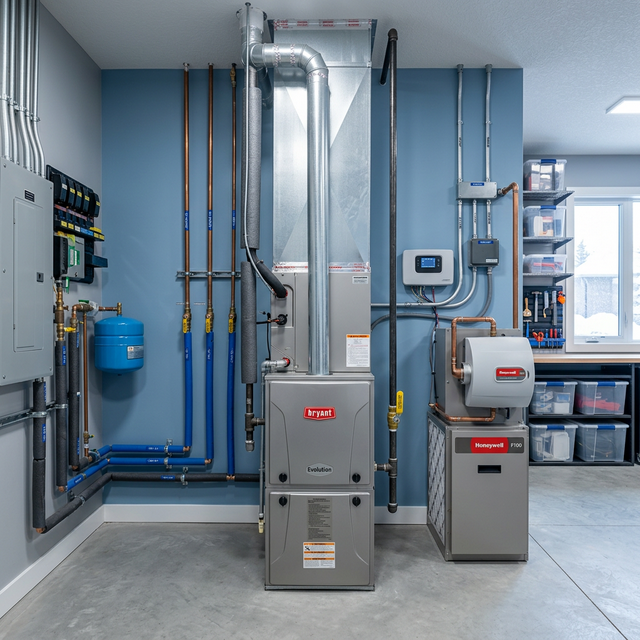
High-efficiency gas furnace installations sized properly for the actual heat load — the single biggest factor in reliability through -30°C weeks and in gas bill outcomes.
Furnace Repair
Diagnostic and repair for common furnace brands and failure points — flame sensors, igniters, pressure switches, inducer motors, control boards. Most emergency calls are one of these, not full replacement.
Furnace Replacement
Full furnace replacement for units past their reliable life. Modern 96%+ AFUE furnaces cut gas usage 15–25% versus 80% AFUE units — meaningful over Edmonton's seven-month heating season.
Furnace Tune-Up & Maintenance
Annual fall inspection catches heat exchanger cracks, failing igniters, and blower issues before the first cold snap. Also the most common way to catch CO safety issues before they matter.
Boiler Services
Install, repair, and service for gas boilers used in hydronic heating systems (radiant floors, radiators, hot water baseboards). Common in older Edmonton homes and increasingly in high-end new builds.
Heat Pump Installation
Cold-climate heat pumps that heat effectively down to -25°C or lower. Increasingly popular in Edmonton with dual-fuel gas backup for the coldest days — and the biggest available rebates.
Thermostat Install & Repair
Smart thermostat installation (Nest, Ecobee, Honeywell), replacement of failed units, and wiring for zoned systems. Many 'furnace not working' calls turn out to be thermostat problems.
Emergency Heating Repair
After-hours dispatch for furnace failures at -20°C and below. Pipes can freeze within hours in an unheated Edmonton home — heating emergencies get priority routing based on outdoor temperature.
Common Heating Services Problems in Edmonton
The specific issues Edmonton homeowners run into — and what typically causes them.
Furnace won't ignite
Thermostat calls for heat but nothing happens. Usually a dirty flame sensor (cheap fix), a failing hot surface igniter, a stuck pressure switch, or an ignition control board issue.
Furnace blowing cold air
Blower runs but air comes out cool. Common causes: pilot/ignition failure, overheating limit-switch trip, thermostat set to fan-on instead of auto, or a cracked heat exchanger triggering safety shutdown.
Furnace short cycling
Furnace turns on and off every few minutes. Usually a clogged filter restricting airflow, a bad flame sensor, an oversized furnace that was never right for the home, or a failing limit switch.
Furnace making noise
Banging (delayed ignition, expanding ducts), whistling (air leak or restriction), rumbling (dirty burners or heat exchanger issue), squealing (blower motor bearing). Each points to a specific cause.
Smells like gas or burning
Faint gas smell near the furnace is a safety issue — shut off the gas at the meter and call for service. Burning-dust smell on first run of the season is usually normal; sustained burning smell isn't.
Uneven heating in the house
Cold rooms, hot rooms, upstairs vs downstairs mismatch. Usually a duct-balance problem, closed dampers, oversized furnace, or a second story with insufficient return-air pathways.
Filter clogs too quickly
New filter, dirty in 2 weeks. Points to duct leaks pulling in dusty basement/crawlspace air, aggressive shedding pets, or drywall/renovation dust that hasn't cleared. Sometimes an oversized filter for the return grille.
Rising winter utility bills
Gas bills climb winter over winter without a change in setpoint. Loss of efficiency from a dirty burner, cracked heat exchanger running longer to reach setpoint, or an aging furnace at 80% AFUE that's due for replacement.
What Edmonton Winters Actually Demand From a Heating System
Edmonton sits in a continental climate with genuine -40°C events most winters. That's not marketing language — it's the operational reality that determines which furnaces hold up and which ones don't. A 96% AFUE furnace that runs reliably at -35°C is worth more in Alberta than a 98% unit that came back from the manufacturer twice.
The heating season here runs from October through April — nearly seven months of continuous load on equipment. Systems that see light service elsewhere accumulate real wear in Edmonton, which is why component quality and annual inspections matter more than they might in a milder climate.
Proper load calculation before any installation is the single biggest factor in reliability. Undersized equipment runs constantly and struggles during cold snaps. Oversized equipment short-cycles, wears faster, and leaves the home at uneven temperature. This is one of the first things to ask a local Edmonton installer to walk you through.
Edmonton Heating Services: Cost & Rebates
Edmonton furnace installation and repair costs vary widely by equipment tier and home size. These are ballpark ranges — actual quotes depend on ductwork condition, gas line runs, and permit requirements.
Typical Cost Ranges
Rebates & Incentives
- Canada Greener Homes GrantUp to $5,000 for heat pump upgrades — federal program open to Alberta homeowners after energy audits.
- Canada Greener Homes LoanInterest-free loan up to $40,000 for eligible upgrades including heat pumps and high-efficiency furnaces.
- Alberta EQP & Provincial ProgramsProvincial rebates for high-efficiency heat pumps and electrification — eligibility varies by year, worth confirming current status.
- Manufacturer & Utility RebatesSeasonal promotions from Lennox, Trane, Carrier, Bryant, Goodman, and utility providers — often stackable with federal programs.
Dedicated pages for the most-searched Edmonton HVAC needs — same connection service, faster access to what's most relevant to your situation.
Related guides on this topic
Furnace Won't Ignite in Edmonton Cold Weather: 7 Causes Ranked by Likelihood
Why Edmonton furnaces fail to ignite most often — ranked by probability, with the DIY safety checks you can run before calling a tech.
Read guide →Furnace Short Cycling in Edmonton: 7 Causes Ranked by How Common They Are
Why your Edmonton furnace keeps starting and stopping every few minutes — and the fix that actually solves it rather than treating the symptom.
Read guide →Furnace Flame Sensor Cleaning: Edmonton Homeowner's Honest Guide
A dirty flame sensor causes roughly 40% of all Edmonton furnace no-heat calls. Here's what it is, why it fails, and what cleaning actually involves.
Read guide →Frequently Asked Questions
How often should I service my furnace in Edmonton?
Annual maintenance is critical in Edmonton. A full inspection every fall is recommended to prevent mid-winter breakdowns when temperatures drop to -30°C or lower. Fall service catches heat exchanger cracks, failing igniters, and dirty burners before the equipment is under real load.
How long do furnaces last in Edmonton?
Standard gas furnaces typically last 15–20 years in Edmonton, sometimes longer with consistent annual maintenance. High-efficiency condensing furnaces (96%+ AFUE) often last 18–22 years. Alberta's long, cold heating season puts more cumulative wear on equipment than milder climates, so the low end of the range is realistic for neglected systems.
Furnace vs heat pump — which is better for Edmonton?
Neither is universally better; the answer depends on the home. Modern cold-climate heat pumps heat effectively down to -25°C, but Edmonton regularly sees -30°C and lower stretches where efficiency drops. The most common practical setup for Edmonton is a 'dual-fuel' system: heat pump for milder days (October–April shoulder seasons), gas furnace as backup for extreme cold. This captures heat pump efficiency plus furnace reliability.
What size furnace do I need for my Edmonton home?
Furnace sizing should be based on a Manual J load calculation — not a rule of thumb per square foot. Edmonton's climate makes this especially important: an undersized furnace can't keep up at -30°C; an oversized furnace short-cycles, wastes gas, and wears out prematurely. Most typical Edmonton homes need 60,000–100,000 BTU input, but the right size depends on insulation, windows, air leakage, and layout.
What are the signs my furnace needs replacement?
Common signals include: (1) age past 15–18 years combined with repair cost creeping up, (2) heat exchanger cracks or corrosion visible on inspection, (3) recurring repairs in a single season, (4) uneven heat despite service, (5) rising gas bills that don't match usage. A single expensive repair on an old furnace often costs more than putting that money toward a replacement with new warranty coverage.
What causes most furnace failures in Edmonton?
The most common failure points are: flame sensor fouling (routine cleaning fixes it), hot surface igniter burnout (typical wear item), pressure switch failure (usually driven by blocked intake or exhaust), inducer motor failure, and control board issues. Heat exchanger cracks are rarer but serious — they can leak CO into the house and require immediate replacement.
Can I install a furnace myself in Edmonton?
No. Alberta requires certified gas fitters for any gas appliance installation or venting work, and permits must be pulled. DIY furnace installations violate code, void manufacturer warranties, create serious safety risks (CO poisoning, gas leaks, fires), and can cause insurance denials on any related damage. Furnace work is one of the areas where the licensing requirement is genuinely about safety.
How long does furnace installation take?
A straightforward furnace replacement — same location, same fuel type, existing ductwork — typically takes 4–8 hours (about half a day to a full day). Adding new ductwork, changing venting, or converting fuel types extends the job to 1–2 days. Full new heating system installs (furnace + heat pump + zone controls) can run 2–3 days.
When is the best time to replace a furnace in Edmonton?
Late spring through early fall (April–September). Installers are less booked, pricing is often better, and you're not making the decision under duress with no heat. If your furnace fails in January, you don't have that luxury — but if maintenance flags it or it's 18+ years old, planning ahead for a summer replacement saves money and stress.
Heating Services Across the Edmonton Capital Region
Select your community to see local service details and what sets your area apart.
Edmonton & Major Suburbs
Don't see your area? Call us — we may still serve you.
Call (825) 402-7112