
Emergency Furnace Repair in Edmonton — 24/7 Dispatch
Furnace failed during an Edmonton cold snap? Dispatch line connects you with local HVAC techs on 24/7 rotation, with priority routing when outdoor temperatures put pipes at freeze risk. Most calls diagnosed and repaired same visit.
What Emergency Furnace Repair Cover
The main considerations for Edmonton residential and commercial properties.
24/7 Emergency Dispatch
Live dispatch line for after-hours furnace failures — nights, weekends, holidays. Priority routing when outdoor temperatures are below -15°C, since pipe-freeze risk climbs steeply from there.
Rapid Diagnosis
Most emergency furnace failures are one of five things: flame sensor, hot surface igniter, pressure switch, limit switch, or control board. Trained techs diagnose in under an hour and often fix same visit with parts stocked on the service truck.
CO & Safety Verification
Any emergency repair should include a combustion analysis to verify safe operation before the tech leaves — especially on older units where the emergency call could be surfacing a heat exchanger or venting safety issue.
Emergency Replacement Options
When repair isn't possible (cracked heat exchanger, catastrophic failure on aging unit), emergency replacement is available with temporary heat provided in the interim. Rare but possible during extreme cold.
Common Emergency Furnace Repair Problems in Edmonton
The specific issues Edmonton homeowners run into — and what typically causes them.
No heat — furnace won't ignite
The #1 emergency call in Edmonton winters. Most often a flame sensor issue (cheap, fast fix) or a failed igniter. Sometimes pressure switch triggered by a blocked exhaust or intake.
Blower running but only cold air
Ignition sequence failed but blower is still trying to circulate. Sometimes triggered by an overheat limit trip; sometimes by ignition failure. Diagnose quickly — running the blower with no heat wastes power without solving anything.
Furnace flashing an error code
LED on the furnace control board flashes a diagnostic pattern. Codes are in the manual (usually pasted inside the front panel). Knowing the code before the tech arrives shortens diagnosis time meaningfully.
Extreme cold outside
Emergency severity scales with outdoor temperature. Below -20°C, pipe freeze becomes a real concern in an unheated home within hours. Below -30°C, minutes matter. Priority routing should reflect this.
Furnace repeatedly tripping
Furnace lights, runs briefly, shuts down; retries; shuts down again. Common causes: overheating limit switch trip (dirty filter, restricted airflow), pressure switch cycling (blocked intake), or safety-triggered shutdown from combustion issue.
Gas smell or CO detector alarm
Immediate emergency. Shut off gas at the meter, open windows if safe to do so, get out of the house, and call emergency dispatch from outside. Do not ignore CO alarms — this is not a repair situation, it's a safety response.
Emergency Furnace Response in Edmonton Winters
Furnace failures at -25°C and below are time-sensitive in a way that non-Alberta HVAC dispatchers don't always appreciate. Pipes in exterior walls can start freezing within hours in an unheated home; interior temperatures drop faster than expected when the outdoor delta is 40+ degrees. Dispatchers who prioritize by outdoor temperature — not just chronological call order — are worth more during peak cold snaps.
Roughly 80% of Edmonton emergency furnace calls resolve as one of five common failure modes (flame sensor, igniter, pressure switch, limit switch, or control board) that trained techs diagnose in under an hour and fix same visit with truck-stocked parts. The rare exceptions — heat exchanger cracks, catastrophic control board failures on older or rare furnace models — sometimes require next-day parts, in which case temporary heat should be provided in the interim.
During true emergencies, calling multiple dispatchers and taking the fastest ETA is reasonable. Priority routing means the coldest-hit homes should get first response, and that isn't always the home that called first — a fair dispatcher will explain how they're triaging when they give you an ETA. Any CO detector alarm is not a repair situation but a safety response — get everyone out and call 911 first, then call for HVAC service to identify the source once the fire department has cleared the home.
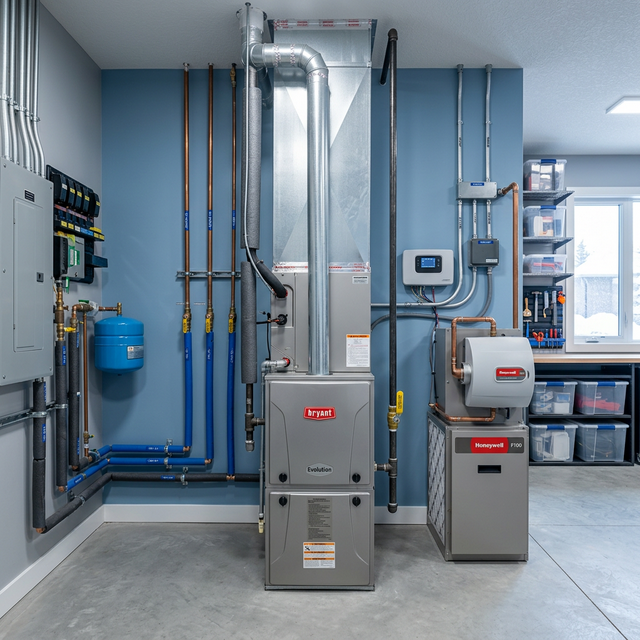
Edmonton Emergency Furnace Repair: Cost & Rebates
Emergency furnace repair pricing in Edmonton includes an after-hours premium on top of standard repair cost. Diagnostic fees are usually flat; parts and labour vary by failure mode.
Typical Cost Ranges
Rebates & Incentives
- Original manufacturer parts warrantyEven during an emergency, if the part is under manufacturer warranty (often 5–10 years on furnace parts) it should be covered — you pay labour and diagnosis only. Worth confirming before authorizing the repair.
- Home warranty programsIf you have a home warranty policy (Canadian Home Warranty, Blue Cross, etc.), emergency furnace repairs are often covered. Check your policy before authorizing out-of-pocket repair.
- Homeowner insurance sudden failure coverageSome policies cover sudden mechanical failures during extreme weather events. Not common but worth checking on any large emergency repair or replacement cost.
Dedicated pages for the most-searched Edmonton HVAC needs — same connection service, faster access to what's most relevant to your situation.
Frequently Asked Questions
How fast can someone come out for an emergency furnace call in Edmonton?
During normal winter cold: 2–4 hours. During peak cold snaps (-25°C and below): dispatchers get slammed and typical wait is 4–8 hours. Dispatch prioritizes by outdoor temperature and vulnerability (young children, elderly, homes at pipe-freeze risk). Calling multiple providers and taking the fastest ETA is reasonable during peak cold events.
What should I do while I'm waiting for the emergency tech?
(1) Set thermostat to normal setting so the tech can immediately see the failure mode. (2) Make sure the furnace has power (breaker) and gas (valve open). (3) Check air filter — if it's black, that alone may be the cause and worth mentioning. (4) Note any flashing error codes from the furnace control board LED. (5) In extreme cold, protect against pipe freeze: open cabinets under sinks on exterior walls, let taps drip, close off unused rooms to concentrate available heat. (6) If temperature drops below 10°C indoors, consider moving vulnerable household members to a warmer location.
Is emergency furnace repair way more expensive than daytime service?
After-hours pricing typically adds $100–$300 on top of standard service call and repair costs. So a $250 flame sensor replacement during business hours might be $400–$500 at 11pm on a Sunday. The premium reflects genuine after-hours labour costs — reputable dispatchers price this transparently before dispatching. Ask for a total estimated range before authorizing the call.
Can most emergency furnace repairs be fixed same visit?
Yes — probably 80% of emergency furnace failures in Edmonton are one of five common failure modes (flame sensor, igniter, pressure switch, limit switch, or control board), all of which good HVAC service trucks carry as stocked parts. Repairs typically take 1–2 hours from arrival. Exceptions: heat exchanger cracks (require replacement, not repair), catastrophic control board failures with less common part numbers, or older/rarer furnace brands where parts aren't stocked.
What if the furnace is beyond repair — can you replace it same night?
Emergency same-night replacement is rare but possible during extreme cold when leaving a home unheated would cause pipe damage. More common: emergency temporary heat (electric or propane heaters, sometimes rental units) to keep the home safe overnight, with proper permanent replacement scheduled for the next 1–2 days. This is a conversation for the tech to have with you on-site once they've confirmed replacement is truly needed.
My CO detector is going off — is this a furnace problem?
Possibly — a cracked heat exchanger, blocked venting, or combustion problem in a gas furnace or hot water heater can leak CO. This is a life-safety situation: get everyone out of the house, call 911 (fire department will check CO levels), and don't re-enter until it's cleared. Then call for emergency furnace service to identify and fix the source. CO detector alarms are never something to reset and ignore.
Do you charge just to come out even if you can't fix it?
Reputable Edmonton HVAC providers charge a service call / diagnostic fee ($100–$200 for daytime, $150–$350 for after-hours) that covers coming out and diagnosing the problem. This fee is often waived if you authorize the repair same visit. If the tech can't fix it (part unavailable, requires specialist, etc.), the diagnostic fee usually still applies since real work was done. Always confirm fee structure up front.
What Edmonton areas do you cover for emergency service?
Dispatch covers Edmonton proper (all quadrants), St. Albert, Sherwood Park, Leduc, Beaumont, Spruce Grove, Stony Plain, Fort Saskatchewan, Devon, and Morinville. Response times vary by dispatcher location and current demand. Farther-out communities may see slightly longer response times during peak cold snaps when nearer service areas are backlogged.
Emergency Furnace Repair Across the Edmonton Capital Region
Select your community to see local service details and what sets your area apart.
Edmonton & Major Suburbs
Don't see your area? Call us — we may still serve you.
Call (825) 402-7112